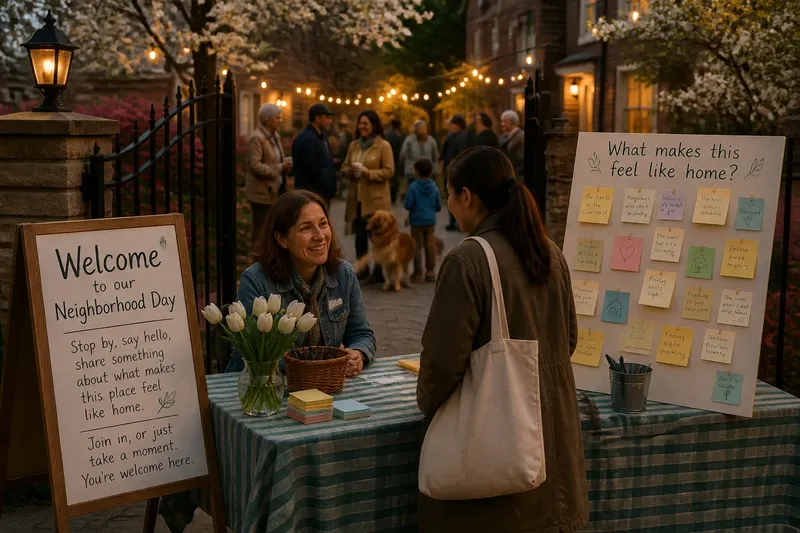
A First Walk Around an Unfamiliar Neighborhood
A first walk around an unfamiliar neighborhood can help you find useful routes, learn local routines, and choose an easy way to take part.
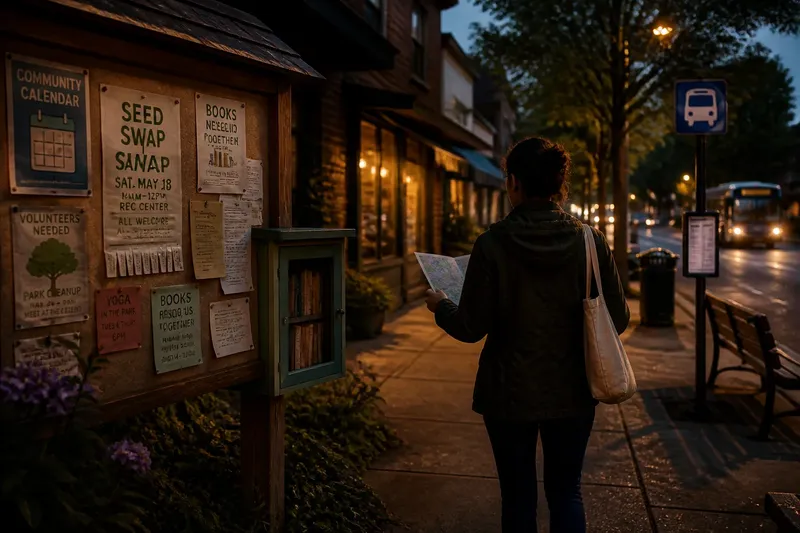
Which route will help you feel less like a visitor without requiring you to introduce yourself to everyone on the block? A first walk around an unfamiliar neighborhood can answer that by showing where everyday routines happen: the library’s return slot, the bus stop people use, or the bulletin board outside a community center.
Choose a route with an ordinary purpose
Start with a destination you may actually need, such as a grocery store, pharmacy, library, or transit stop. A practical errand gives the walk a shape and makes it easier to notice how the neighborhood works without treating its residents as a field study.
Use a paper map or a map app to connect the destination to one nearby community resource. A library, recreation center, or public bulletin board can reveal recurring activities and the names people use for local places. Check posted hours before planning around a service; a closed door is an unhelpful introduction.
Keep the route simple enough that you can look around while walking. Notice street signs, crosswalks, bus routes, and landmarks that would help you return. If a sidewalk ends or a crossing feels difficult, choose a safer route rather than pressing on to preserve the map’s opinion of itself.
Notice how neighbors exchange useful information
Local life often becomes legible through small pieces of information. Look for a community-center calendar, a neighborhood association notice, a Little Free Library, or flyers posted where people are allowed to read them. These can tell you what activities are open to newcomers and whom to contact for details.
Distinguish information from an invitation. A flyer for a public cleanup may welcome volunteers; a notice for a residents-only meeting may not. Read the wording, date, location, and contact method before deciding whether an event fits. If the notice is old or unclear, use the listed organization’s official website or phone number to confirm.
Say you are walking from a new apartment to the library and see a flyer for a public seed swap at the recreation center. The starting information is the flyer’s date, location, and organizer’s contact details. You check the center’s official page, confirm that visitors may attend, and save the address in your phone; the result is a clear, low-pressure option for meeting people around a shared activity. If the page does not confirm access, you can call the center or choose another event rather than guessing.
Learn local routines without treating them as rules
A place may have a recognizable rhythm: people heading toward a transit stop in the morning, families arriving at a playground after school, or volunteers setting up tables before a market. A single walk offers only a snapshot. Weather, work schedules, and special events can change what you see.
Notice routines without assuming they apply to everyone. A busy cafe may be a familiar meeting point for some neighbors and irrelevant to others. The useful question is whether a place or activity is open to you, not whether you can decode the entire neighborhood from one afternoon.
If you want a better sense of timing, repeat the route on another ordinary day. You can compare what is open, which services are available, and whether posted information has changed. Keep the comparison practical: it is a way to plan your own errands, not a verdict on the community.
Use a small set of checks to plan your next outing
Before you head out, note what you need and what would make the trip workable. Each observation should lead to a decision, not another reason to keep inspecting the block.
- Check whether the destination’s hours are current; if they are, plan the visit, and if they are not, confirm by phone or choose another destination.
- Check whether the route has a usable sidewalk and safe crossing; if it does, follow it, and if it does not, select a different route.
- Check whether a community notice gives a date and organizer; if both are clear, verify the event with that organization, and if either is missing, do not rely on the notice.
- Check whether an activity is open to newcomers; if the notice says it is public, consider attending, and if access is restricted or unclear, contact the organizer or skip it.
- Check whether you can identify a return landmark, such as a library sign or a transit stop; if you can, save it in your map, and if you cannot, choose a route with clearer landmarks.
- Check whether the walk includes a practical stop you need; if it does, keep the route, and if it does not, add a useful destination or shorten the outing.
These checks are enough for a first outing. A compact note with one destination, one useful contact, and one route back is more usable than a phone full of photographs of unverified flyers.
Which first-walk questions are worth asking?
What should I look for on a first neighborhood walk?
Look for useful destinations, readable signs, public information, and routes you can comfortably follow. These details help you plan errands and identify activities without needing to interpret every social interaction.
How can I find local events?
Check community-center calendars, library boards, neighborhood association pages, and notices posted by named organizations. Confirm the date and whether newcomers may attend before making a trip.
Do I need to introduce myself to neighbors?
No. A brief greeting is fine if an exchange arises naturally, but you can learn practical details through public notices and services. You are allowed to finish your walk without becoming the neighborhood’s newest committee member.
How do I know if a local activity is open to me?
Read the event description for access rules, registration instructions, and contact information. If those details are missing, ask the organizer or choose an activity whose terms are clear.
Let useful familiarity build at your pace
A first walk around an unfamiliar neighborhood does not need to settle whether you belong there. Its concrete job is to leave you with a route you can repeat, a service you can use, and a reliable way to check local information. Those small bearings make the next outing easier to plan.
Keep the notes that answer real questions: which entrance is open, where the bus stop is, or how to confirm a public event. If you return to the same places, the neighborhood becomes easier to use without turning every walk into a test of whether you have made it home.