Why a Shared Bench Changes the Shape of a Street
A shared bench can make pausing on a street feel ordinary, creating room for brief conversation without scheduling a gathering or demanding attention.
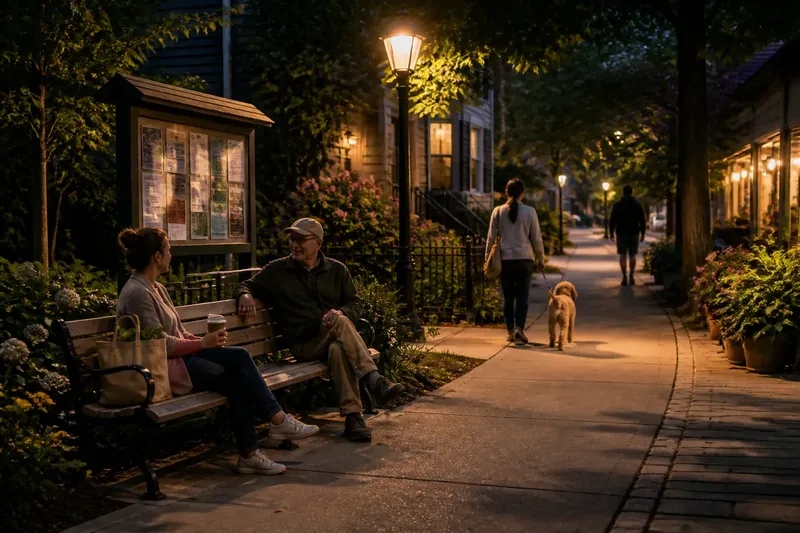
A shared bench can make a pause on a street feel ordinary. Put a place to sit beside a route people already use, and someone can rest a shopping bag, finish a thought, or greet a neighbor without arranging to meet. The useful question is not how to make strangers talk. It is how to let people linger without making a performance of it.
A bench is not a social program, and sitting on it does not obligate anyone to be friendly. Its quiet contribution is to offer a low-pressure option between moving on and making a formal visit. It should work for conversation, and for a book, a takeaway coffee, or a few minutes of quiet.
A shared bench makes a pause legible
On a street with nowhere obvious to stop, people tend to keep moving or stand in a doorway. Neither position says much about whether a brief conversation is welcome. A bench makes the pause readable: sitting is what the furniture is for. That small permission can ease the awkwardness of staying another minute.
The bench also gives a conversation a natural boundary. A passerby can stop at one end, say hello, and leave without turning the encounter into a visit. Someone seated can answer warmly or look ahead again. The setting does not promise closeness; it lets a modest exchange happen without requiring a reason.
Placement shapes that invitation. A bench facing the street lets seated people see who is approaching, while one tucked behind a hedge may feel private or hard to notice. A seat beside a busy doorway can obstruct traffic and make lingering feel intrusive. Aim for a pause point that is visible, accessible, and outside the path people need to use.
Choose a position that belongs to ordinary errands
A bench works best when it meets people during a routine rather than asking them to make a special trip. Consider a corner near a small park entrance, a public path, or a community notice board. The place should already have a reason for people to walk by, with room to stop without blocking a gate, curb ramp, or storefront entrance.
Before proposing a location, watch how people use the space at different points in an ordinary day. Notice where they carry groceries, wait for a child, walk a dog, or pause to check a phone. Look for desire paths and bottlenecks. A peaceful-looking spot may become a pinch point when deliveries arrive or a school lets out.
Comfort is practical, not ornamental. Shade can make a sunny corner usable; a clear view can help a person feel less hidden. A bench with a back may suit someone who wants to rest longer, while a simple seat may encourage a brief stop. Check whether wheelchair users can approach and remain beside it, and whether plants, parked vehicles, or signs limit visibility. The bench should add an option, not claim the sidewalk.
Questions about choosing and sharing a bench?
Where should a shared bench go?
Look beside an existing pedestrian route, where someone can step aside without blocking access. A visible spot near a park path or neighborhood notice board may invite a pause more naturally than a secluded corner.
Does a bench need a sign?
Usually, the seat itself explains its purpose. A short sign can identify who maintains it or clarify that the space is public, but rules-heavy wording may make a casual stop feel supervised.
How can neighbors use it without organizing an event?
They can keep ordinary routines: sit briefly after a walk, greet someone passing, or leave room for the next person. No schedule or host is needed for a place to be shared.
What if people prefer to sit alone?
That is a valid use. A shared bench should allow quiet company as well as conversation, and nobody needs to treat a seat as an invitation to interrupt.
Check the location before proposing a bench
A short walk-through can expose problems that a map will not. For each observation, decide what it means for the proposed spot; if the condition is poor, choose an alternative location or address the obstacle before proceeding.
- Observe the walking route: If people can pass the proposed seat without squeezing by, keep the location; if they cannot, move it farther from the route.
- Check curb ramps and gates: If the approach leaves access clear, retain the spot; if a ramp, gate, or entrance would be obstructed, select another position.
- Look for a clear view: If the bench would be visible from the path, keep the placement; if plants, signs, or parked vehicles hide it, clear the obstruction where permitted or move the seat.
- Notice sun and shade: If the spot offers a comfortable place to pause during the times people use it, retain it; if it is too exposed, look for a nearby shaded position.
- Watch for busy periods: If deliveries, school pickup, or other routines leave the area passable, keep the location; if they create a bottleneck, choose a quieter corner.
- Identify who controls the property: If the owner or local authority approves the placement, proceed with their requirements; if permission is unclear or denied, do not install the bench there and ask about another site.
Let the first days stay ordinary
A new bench does not need a launch event unless the surrounding community wants one. A gathering can help people notice a seat, but it can also make the bench seem reserved for the people who organized the gathering. A quieter start leaves residents room to decide what the place means in their own routines.
Imagine a block with an unused patch beside a public walking path. In this invented situation, neighbors first observe that walkers pass easily, the curb ramp remains clear, and a delivery route does not cross the patch. They ask the local office responsible for the path about permission. When told that the spot is not available, they check a nearby park entrance instead; it has a clear approach and sits outside the gate’s swing. They receive permission there and place the bench beside, not across, the path. The observable result is that a walker can sit without blocking others, and another passerby can choose to greet them or keep walking. The tradeoff is that the bench is less central than the original patch, but the route stays clear.
After placement, notice the space without keeping score. Does anyone have to move a bag to make room? Do walkers squeeze past? Is the seat easy to see from the path? These observations can suggest small adjustments, such as moving a nearby planter or changing a sign’s position. They do not need to become a record of who spoke to whom.
Build care into the place, not into a social obligation
A shared seat needs ordinary upkeep. Someone should know whom to contact about litter, a loose board, or damage, and the route around it should remain clear. If residents take turns checking the area, keep the arrangement simple and voluntary. A bench that depends on one person’s unspoken labor can become a source of irritation rather than a shared resource.
Responsibility depends on where the bench sits. Public property, a business frontage, and a privately managed courtyard come with different permissions. Ask the relevant owner or local authority before installing furniture, and follow applicable access and maintenance requirements. Where local rules or manufacturer instructions matter, check them directly.
Keep the seat open to different kinds of use. A person eating lunch, waiting for a ride, or taking a quiet break is not misusing a community space merely because no conversation follows. If the bench regularly fills, consider whether nearby seating is needed rather than asking people to leave faster. Shared does not mean constantly sociable.
Notice what the street asks for over time
As the bench becomes part of the street, it may reveal what makes the location comfortable: shade, a clear approach, or a place to set down a bag. It may also show that the corner is too exposed, noisy, or awkward for someone using a mobility aid. Treat those signs as information about the location, not as a verdict on whether neighbors are sociable.
Ask people who use the space what would make it easier to approach. Keep the question concrete: Is the route clear? Is the seat comfortable for a short rest? Does the position feel exposed? A conversation about access and placement is more useful than asking whether the bench has “built community,” a phrase that makes street furniture sound responsible for everyone’s social life.
Not every pause will become a conversation, and not every conversation needs to continue. The bench’s value lies partly in letting people share a place without first agreeing to spend time together. A good shared bench makes the option to stay visible; the choice to speak, sit quietly, or keep walking remains with each person.
For anyone considering a shared bench, the practical question is whether a passerby can stop without blocking someone else and leave without making a scene. If so, the street has gained a small kind of hospitality. The shared bench does not demand a new custom; it gives an existing routine somewhere to pause.